After a heavy Houston-area rain, water may collect near the foundation, along a fence line, or in a low section of the lawn. Homeowners often ask whether a French drain or catch basin is the better solution. The answer depends on where the water is coming from, how it moves across the property, and where it can safely discharge.
What a catch basin does
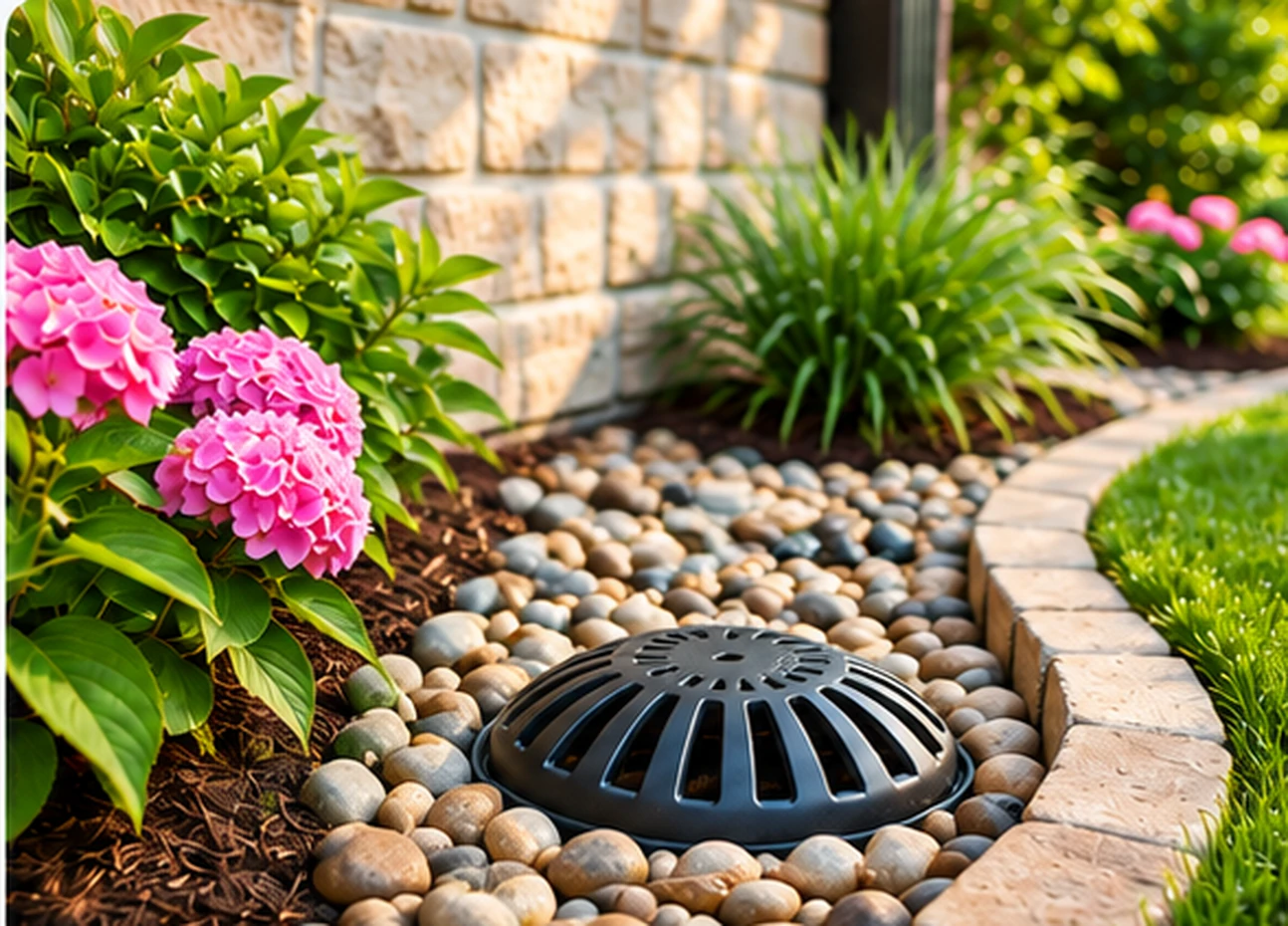
A catch basin is a surface-water collection point. A grated inlet is placed at a low spot so water flowing across the ground enters the basin and is carried away through connected drainpipe. For standing puddles that gather at a visible low point after rainfall, a catch basin may be an effective component of the design.
Several basins can be connected to a solid underground drain line where the layout and available slope allow. The size, number, and placement of basins should follow the contributing drainage area rather than a one-size-fits-all rule.
What a French drain does
A French drain generally uses gravel and a perforated pipe to collect water that moves through saturated soil. It can help intercept subsurface seepage along a lawn, walkway, or other problem area. It works differently from a grated basin, which collects water at the surface.
A French drain is not automatically the best answer for every puddle. If stormwater is flowing rapidly over the surface into a low spot, a properly located inlet may collect that water more directly. Conversely, a basin alone may not address persistently wet soil caused by subsurface conditions.
Already have a drainage system?
If your yard already has drains, check from a safe position for leaves or mulch blocking the grate, visible debris in an accessible basin, and an outlet obstructed by soil or vegetation. Do not enter a drain or dismantle buried pipe. A drainage assessment can determine whether cleaning or repairing the existing system will solve the problem before recommending new components.
Which system makes sense for your yard?
For visible surface pooling immediately after a storm, evaluate catch basins, surface grading, and the path water follows toward a suitable discharge location. For water seeping into a planting bed or an area that stays saturated between storms, investigate soil conditions and whether a French drain is appropriate. If a downspout is concentrating roof runoff beside the house, a dedicated downspout connection and solid conveyance line may be part of the solution.
Some properties need a combination of these approaches. The right layout also considers how water moves from neighboring lots and whether the proposed system could unintentionally send runoff onto someone else's property.
Why pipe routing and discharge matter more than the label
A drain system needs somewhere for the collected water to go. Solid underground pipe is commonly used to convey captured water away from the collection point; perforated pipe is used where the design calls for collecting water along its length. Proper slope, outlet elevation, accessible cleanouts where appropriate, and an approved discharge location are crucial to long-term performance.
Before planning to discharge at the curb or street, confirm the property and local requirements permit the outlet. A well-placed catch basin connected to a pipe with no effective outlet will not solve the underlying drainage problem.
What to photograph before requesting a drainage assessment
Take photos while water is standing and again several hours after the rain. Note whether the problem begins at a downspout, a fence line, a patio, or the side yard. If possible, record where water eventually drains. These observations help distinguish a surface grading problem from a subsurface drainage problem.
Drainage solutions from Rain Day Irrigation
Rain Day Irrigation designs and installs yard drainage solutions for Katy, Fulshear, Richmond, Cinco Ranch, and surrounding Greater Houston communities. Depending on site conditions, a proposal may include catch basins, French drains, solid drain lines, gutter downspout connections, and appropriate discharge routing.
Every property is different. An on-site drainage assessment is the right way to decide which components are useful, where they should go, and how they can function together. Request a drainage consultation through the Rain Day Irrigation website or call (832) 209-2254.