
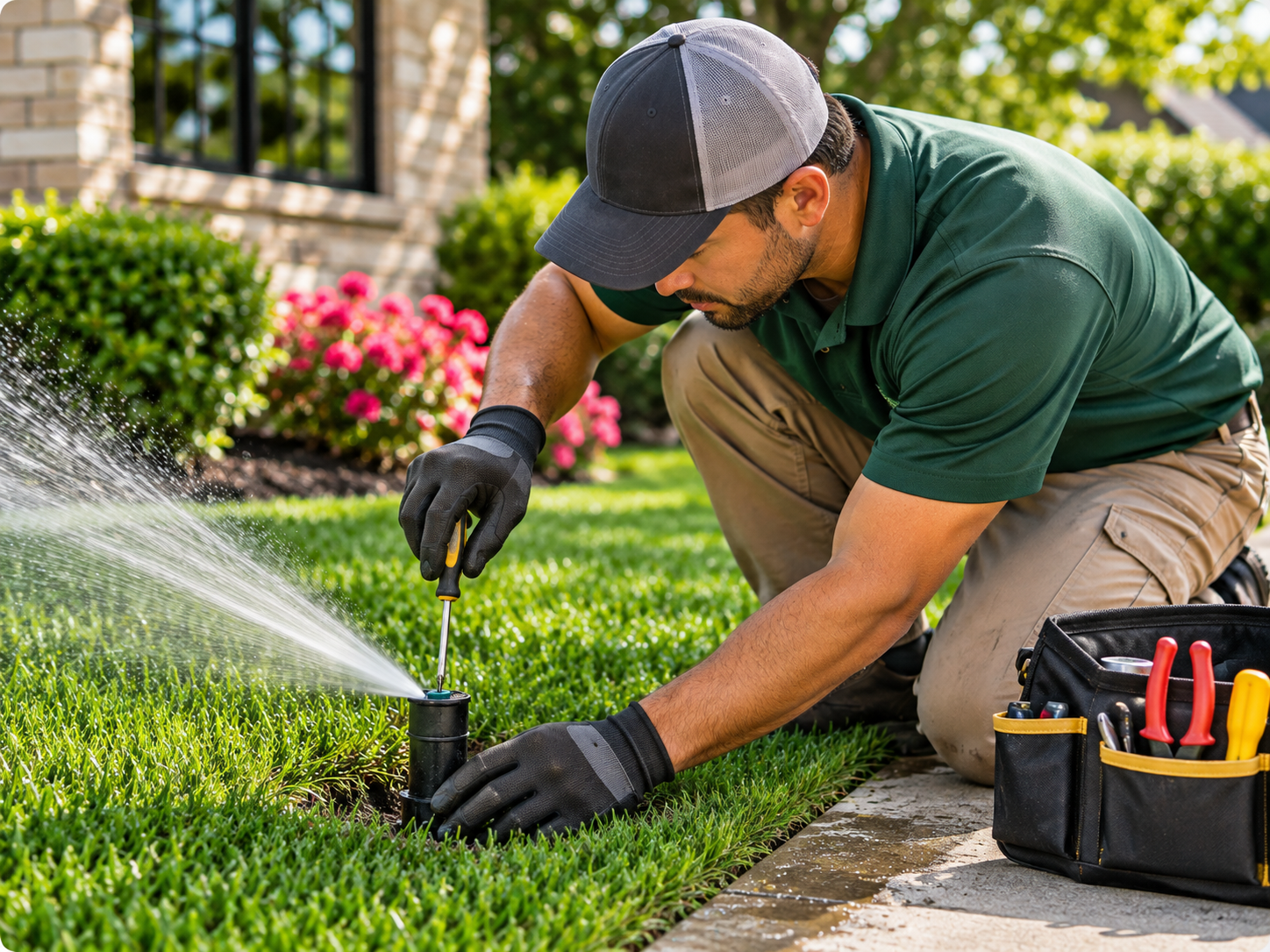
A sprinkler system can run on schedule and still miss part of the lawn, water the sidewalk or leak underground. A short inspection can help you spot changes early and explain the problem when you request service. Start with what you can observe, then make adjustments that fit your equipment and property.
Watch each zone while it runs
Use your controller's manual-watering instructions to run one station at a time. Walk the area and note heads that do not rise, weak spray, blocked coverage, misting or water escaping around a sprinkler. Look for wet patches that appear only while that station operates. Record the station number and take photos. A dry patch does not always mean the system needs a longer run time; check coverage and operation first.
Keep nozzles and filters clear
Dirt or debris in a nozzle or its filter can distort the spray pattern. Before removing parts, stop watering and follow the manufacturer's instructions for that sprinkler. Where a removable filter is provided, rinse it and the nozzle with clean water; use only cleaning methods approved for the model. Avoid pushing sharp objects into a nozzle opening because that can change its spray. Keep soil out of the open sprinkler body. Reassemble the parts, run the station and check the result. If clogging returns, have the cause investigated.
Correct coverage without guessing at parts
Watch for spray hitting pavement, walls or a landscape border. Growing plants, added mulch and settling soil can obstruct a head that once worked correctly. Adjust the arc and direction using the instructions for the installed model. A damaged head or nozzle should be replaced with a compatible component suited to the zone; a different spray pattern or output can create uneven watering. If several heads are weak, investigate flow, pressure, valves and possible leaks before replacing all of them.
Respond to leaks and persistent problems
Bubbling water, an unusually wet strip or water that continues after a zone should have stopped deserves attention. Turn off the affected station when you see substantial leaking. If water continues, use the irrigation shutoff only if you can identify and operate it safely, then arrange service. Avoid opening electrical splices or excavating around buried utilities. Tell the technician which zones still work, what the controller displays, and whether recent pool, fence or landscape work may have affected the system.
Adjust watering for rain and changing seasons
Review watering days, start times and run times as weather and landscape needs change. Use your controller's rain-delay or seasonal-adjustment functions according to its manual, and follow your water provider's current watering rules. Check the soil and recent rainfall rather than leaving the same schedule in place all year. If water runs off before it soaks in, a suitable cycle-and-soak schedule may help. Texas A&M AgriLife's Water My Yard program offers local recommendations where supported; use them alongside your property's soil, plants and irrigation performance.
Check sensors and smart-controller settings
A rain sensor or weather-based controller can help adjust watering, but correct setup still matters. Confirm that the date, time, station settings and relevant sensor options match your equipment. Review the program after a power interruption or controller change. Smart scheduling should reflect the actual zones and landscape; it cannot repair a leak or correct a blocked head. Some systems can use compatible soil-moisture sensors. If you want an upgrade, discuss the existing controller, wiring and equipment before selecting replacements.
Prepare for cold weather and inspect afterward
Before a predicted freeze, review exposed piping and backflow equipment with a qualified irrigation professional. Protection steps depend on the system, so follow equipment-specific guidance instead of copying a procedure intended for a different setup. After freezing weather, check for damage and leaks before returning to normal operation. Rain Day Irrigation can review winterization needs and inspect an existing system that is not operating correctly.
Know when to request a sprinkler repair visit
Recurring leaks, a zone that will not operate, repeated nozzle clogs and ongoing weak coverage call for diagnosis. Send Rain Day Irrigation your service address, the affected station numbers and a short description of what you see. We review the request, assess the system and explain the proposed work before repairs. Our published service area includes Katy, Cinco Ranch, Fulshear, Richmond, Rosenberg, Sealy and Sugar Land; availability depends on the address and requested work.