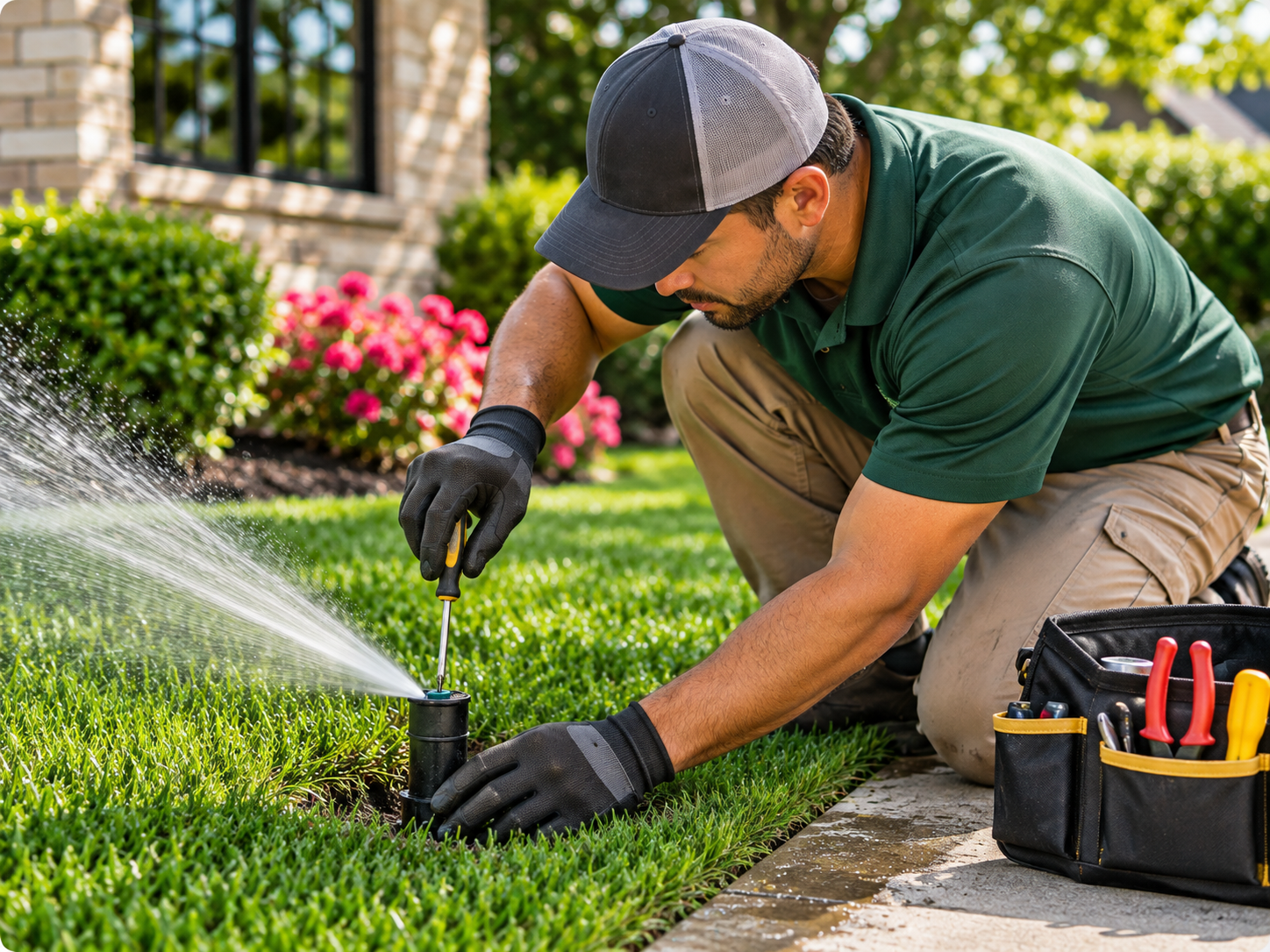
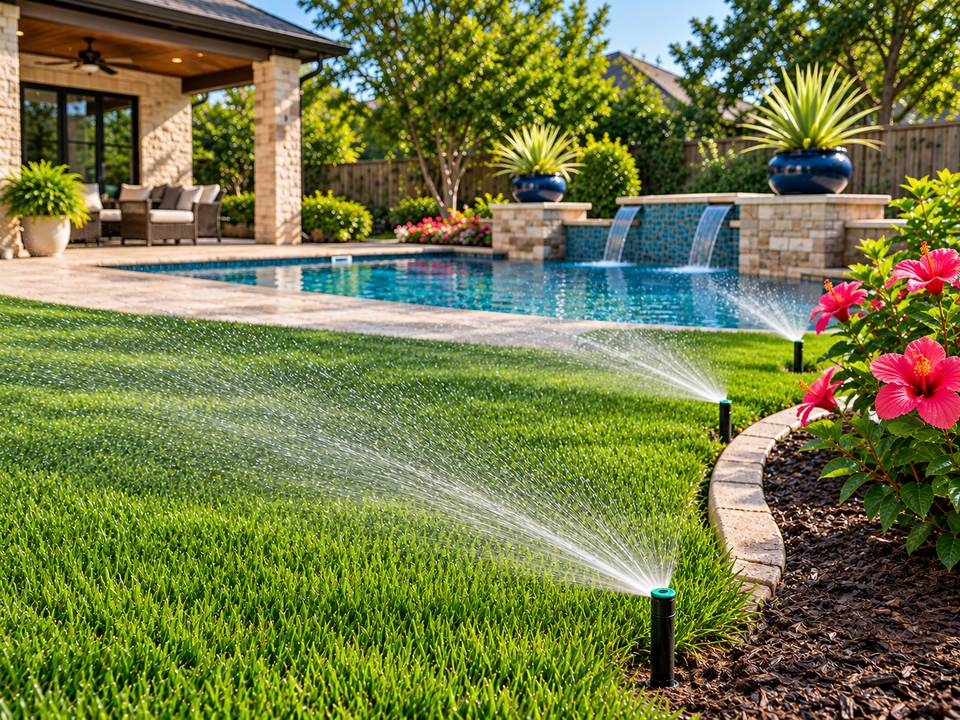
The first time you turn on the sprinklers after a pool build, watch where the water goes. The heads along the back fence might pop up just fine, while another head waters the new deck and the strip of fresh sod by the gate stays dry.
Do you need to replace the whole system? Often, you can keep much of it. Two questions help you decide where to start. What got damaged during construction? And where does the yard need water now that the pool is in?
Walk the construction path first
Start at the gate the crews used and follow their route to the pool. That narrow side yard is easy to overlook once the fence is back up. Look for tilted heads, exposed pipe ends, or a sprinkler that disappeared under new sod. Ask the builder whether any irrigation lines were cut or capped and where. A photo taken before the deck was poured can save a lot of guesswork.
Check one sprinkler zone at a time
If you know a pipe was left open, leave that zone off. For the other zones, use the controller’s manual setting and run each one just long enough to see what happens. Walk the lawn while it runs and write down the station number. If water starts welling up from the ground, turn that station off.
A note like “Station 4 bubbles up beside the gate, and the last three heads barely rise” gives a technician a place to start. If a station does nothing at all, write that down too. A dry zone alone won’t tell you whether the issue is a pipe, a valve, or wiring.
Decide whether a repair will give you the coverage you need
Picture a broken head beside the gate. The grass is still the same shape, and the nearby heads reach the lawn the way they did before construction. A repair at that spot may be all that section needs.
Now picture a sprinkler that used to throw water across the middle of the backyard. The pool occupies that space today. Turning the head away from the deck might keep the concrete dry but leave the far end of the lawn without water. In that case, it makes sense to look at the whole strip before spending money replacing individual heads. Moving a head to the opposite edge, changing the spray pattern, or rerouting a pipe may give the remaining grass better coverage.
If the sod hasn’t gone down yet
This is a good time to have the pool builder, landscaper, and irrigation contractor look at the same plan. Mark the finished deck edge, the lawn you’re keeping, and the beds that will need water. If trenches are still open, photograph exposed pipes and wires with a fixed landmark in the frame, such as a fence corner. A close-up of a pipe is much more useful later if you can tell where it was.
What to check before you call the job finished
Walk the repaired zones with the technician. Stand at the end of the side yard and check whether the spray reaches it. Watch the edge of the pool deck for overspray. Ask which station now waters each area, and have the controller labels updated if the layout changed. That way, when one strip needs attention later, you’ll know which station to run.
If you’re in Katy or a nearby community, see how Rain Day handles sprinkler rebuilds after pool construction. To arrange a visit, request an irrigation quote and tell us what stage the pool project is in. Even a simple note like “deck is finished, sod goes in next week” helps us plan the next step with you.